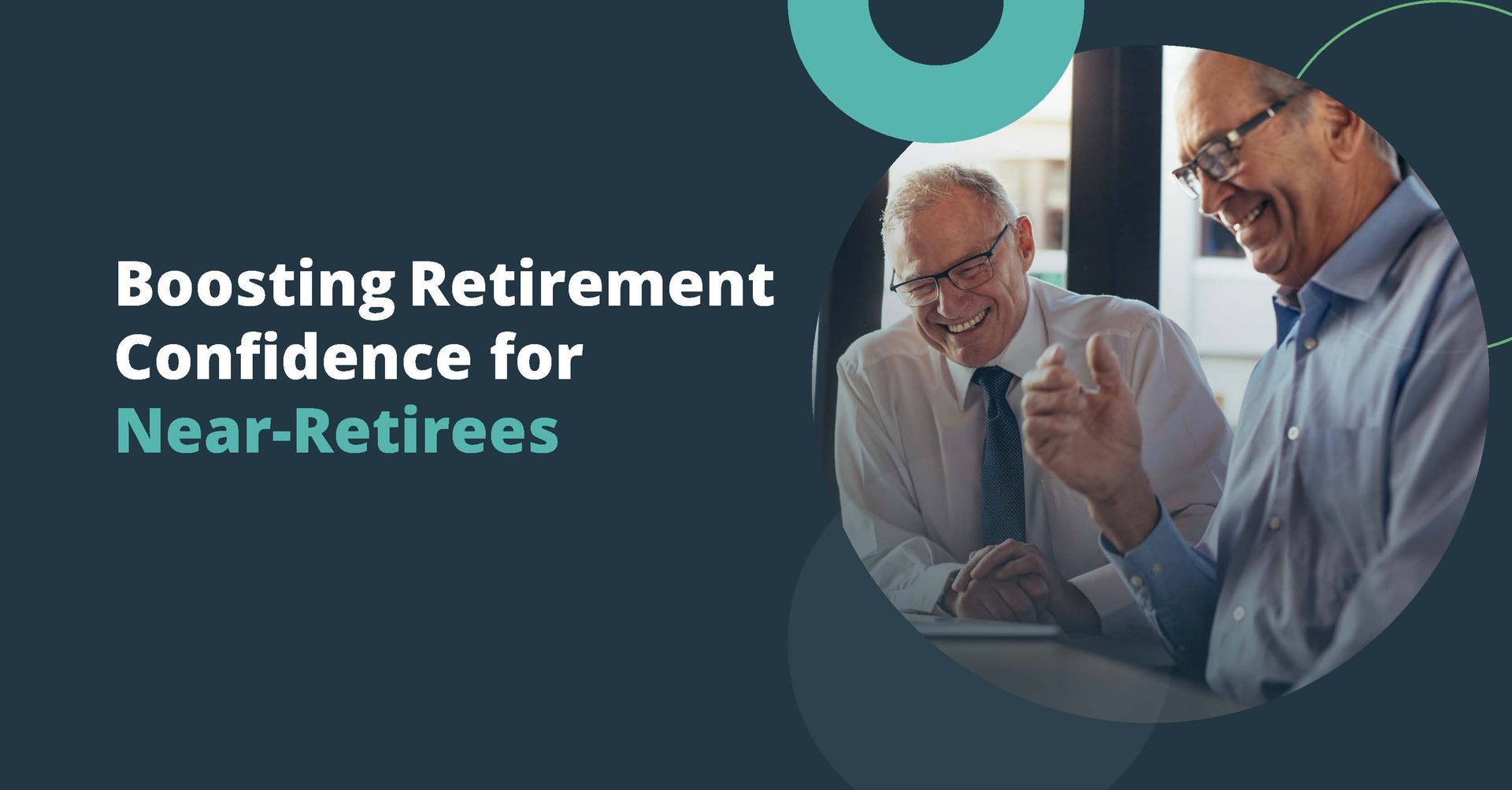
Boosting Retirement Confidence for Near-Retirees
Employees late in their careers need information that helps smooth the transition into retirement.
We are entering the “Great Retirement” era, where tens of thousands are hitting retirement age daily. By 2030, the entire baby boomer generation will be 65 or older. These hard working and resilient employees were the first to experience the shift from guaranteed pension plans to defined contribution plans such as 401(k)s. With retirement in sight, near-retirees are a key target audience for financial wellness programs.
Older employees are likely to experience heightened financial stress and anxiety as they transition from work into retirement. The bad news is that financial stress can have a corrosive effect in the workplace. The good news is that near-retirees are likely to be open to, and may actively seek, information that helps transform retirement uncertainty into retirement confidence.
The information can be delivered in a variety of ways, including through education programs and communications strategies. Having a professional offer individual financial advice or coaching can make it easier for employees to apply what they’ve learned. As you consider how best to convey the value of your workplace benefits, here are four topics that should resonate with near-retirees.
Saving in the Home Stretch
It’s good to start with the basics, reminding employees that they have opportunities to set aside tax-advantaged savings in traditional and/or Roth workplace retirement plan accounts. If your plan permits them, discuss the value of catch-up contributions.
- Plan participants who are 50 or older can save more with catch-up contributions. The IRS adjusts this each year; but for 2024, the limit is $7,500.
- The SECURE Act allows a new level of catch-up contribution in 2025. Participants aged 60 to 63 can make catch-up contributions equal to the greater of $10,000, adjusted annually for inflation or 150% of the 2024 catch-up contribution amount (indexed for inflation).
- In 2026, catch-up contributions made by participants earning $145,000 or more annually must be Roth contributions.
The Incredible Versatility of HSAs
Healthcare costs can be a big financial burden for older workers. However, relatively few employees have confidently saved for healthcare expenses, even those who participate in qualifying high-deductible healthcare plans (HDHP) paired with health savings accounts (HSAs). It’s a missed opportunity.
HSAs give employees another tax-advantaged way to save and invest for retirement. HSAs offer a triple-tax advantage.
- Eligible employees contribute pre-tax dollars
- Any investment earnings grow tax deferred
- Withdrawals used for qualified medical expenses are tax-free
Of note, after age 65, HSA savings can be withdrawn for any purpose without a penalty (although distributions used for non-medical purposes may be taxable). The funds can be used to reimburse premiums for some Medicare costs, as well as healthcare costs not covered by Medicare. Typically, eligible employees can continue to make HSA contributions until they apply for Medicare or Social Security.
A Primer on Social Security and Medicare Benefits
Almost half of employees want employers to educate them about Social Security and Medicare benefits.[1] Employers can provide programs that offer insights on how to optimize Social Security benefits and make Medicare decisions, or they can hire a knowledgeable professional to provide individual counseling.
Either way, it’s important to manage expectations of Social Security. The most recent Trustees Report estimated that Social Security Trust Fund reserves will be depleted in 2034. Unless Congress acts, benefits may be reduced by 20% in the future.[2] Since Social Security benefits are one of the few guaranteed income options available, it may be beneficial to discuss other guaranteed income options as well.
The Advantages of Account Consolidation
It is not uncommon for adults to have held 12 or more jobs throughout the course of their careers. If they left assets behind in former employers’ workplace retirement plans, account consolidation could help clarify how much they’ve saved and how their savings are invested. In addition, if your workplace retirement plan allows roll-ins, account consolidation could potentially lift average plan balances and lower plan expenses.
The Future is Bright
Near-retirees are receptive to education and communications about saving for the future. Employers who offer programs that help smooth the transition from work to retirement often realize benefits, including greater employee loyalty and improved productivity. If you would like more information, please get in touch.
[1] Bank of America. “2023 Workplace Benefits Report.” Aug 2023.
[2]
Social Security Administration. “Status of the Social Security and Medicare Programs.” 2023.